Maintaining a safe environment in a daycare center involves more than just sanitizing toys and keeping play areas organized. One of the most critical, yet often invisible, factors in a child’s health is the quality of the air they breathe. Daycare facilities are unique environments where high occupancy, frequent activity, and the presence of developing immune systems create a specific set of challenges for indoor air quality (IAQ).
According to the U.S. Environmental Protection Agency (EPA), indoor air can be two to five times more polluted than outdoor air. For daycare centers, where children spend the majority of their day crawling, playing, and napping, the state of the ventilation system is not just a maintenance issue, it is a fundamental health and safety requirement.
The Vulnerability of Developing Lungs

Children are not just “small adults” when it comes to air pollution. They are significantly more susceptible to the effects of contaminated air because their respiratory systems are still developing until they reach approximately eight years of age. Proportionally, children breathe more air per pound of body weight than adults, meaning they inhale a higher concentration of pollutants relative to their size.
The Centers for Disease Control and Prevention (CDC) notes that poor indoor air quality can aggravate asthma—the leading cause of chronic illness and absenteeism in school-age children. In a daycare setting, dust mites, mold spores, and pet dander (carried in on children’s clothing) settle inside the HVAC ductwork. Every time the system cycles on, these irritants are blasted back into the breathing zone of the children, potentially triggering respiratory distress and allergic reactions.
Common Contaminants Found in Daycare Ductwork
Because daycare centers are high-traffic areas, they accumulate debris at a much faster rate than a typical residential home. Several specific contaminants frequently thrive within these commercial systems:
- Pollen and Seasonal Allergens: Tracked in from playgrounds and outdoor play areas.
- Microbial Growth: High humidity from kitchen areas or frequent cleaning can lead to condensation in ducts, providing a breeding ground for mold.
- Fabric Fibers and Lint: Derived from nap blankets, rugs, and dress-up clothes.
- Bacteria and Viruses: In shared spaces, airborne pathogens can settle in the dust within ducts and recirculate, contributing to the “office building effect” where illness spreads rapidly through a facility.
Regular professional cleaning ensures that these pollutants are physically removed from the building rather than being trapped in a loop of constant recirculation.
The Business Case: Energy Efficiency and Cost Savings
Beyond the health benefits, maintaining clean air ducts is a sound financial decision for daycare owners. When dust and debris accumulate in the ventilation system, they create airflow resistance. This forces the HVAC unit to work harder to maintain the desired temperature, leading to increased wear and tear on expensive components like the blower motor and evaporator coils.
Research from the U.S. Department of Energy suggests that cleaning even lightly soiled heating and cooling systems can improve energy efficiency and lower utility bills. For a daycare operating on tight margins, the reduction in monthly energy costs and the extension of the HVAC system’s lifespan can provide significant long-term savings. Furthermore, a facility that smells fresh and looks clean (without visible dust around vents) builds with parents, who are increasingly savvy about the environmental health of the centers they choose.
Compliance and Safety Standards
While there is no single federal law mandating duct cleaning frequency, daycare centers are often subject to strict state and local health inspections. Accumulations of dust and debris are often cited as fire hazards or health violations during routine safety audits.
The National Air Duct Cleaners Association (NADCA) recommends that commercial and high-occupancy buildings have their HVAC systems inspected annually. For daycare centers, a professional cleaning every 2 to 3 years—or immediately following any interior renovation—is considered best practice to ensure compliance with the ASHRAE Standard 62.1 for acceptable indoor air quality.
How Professional Cleaning Differs from Janitorial Work
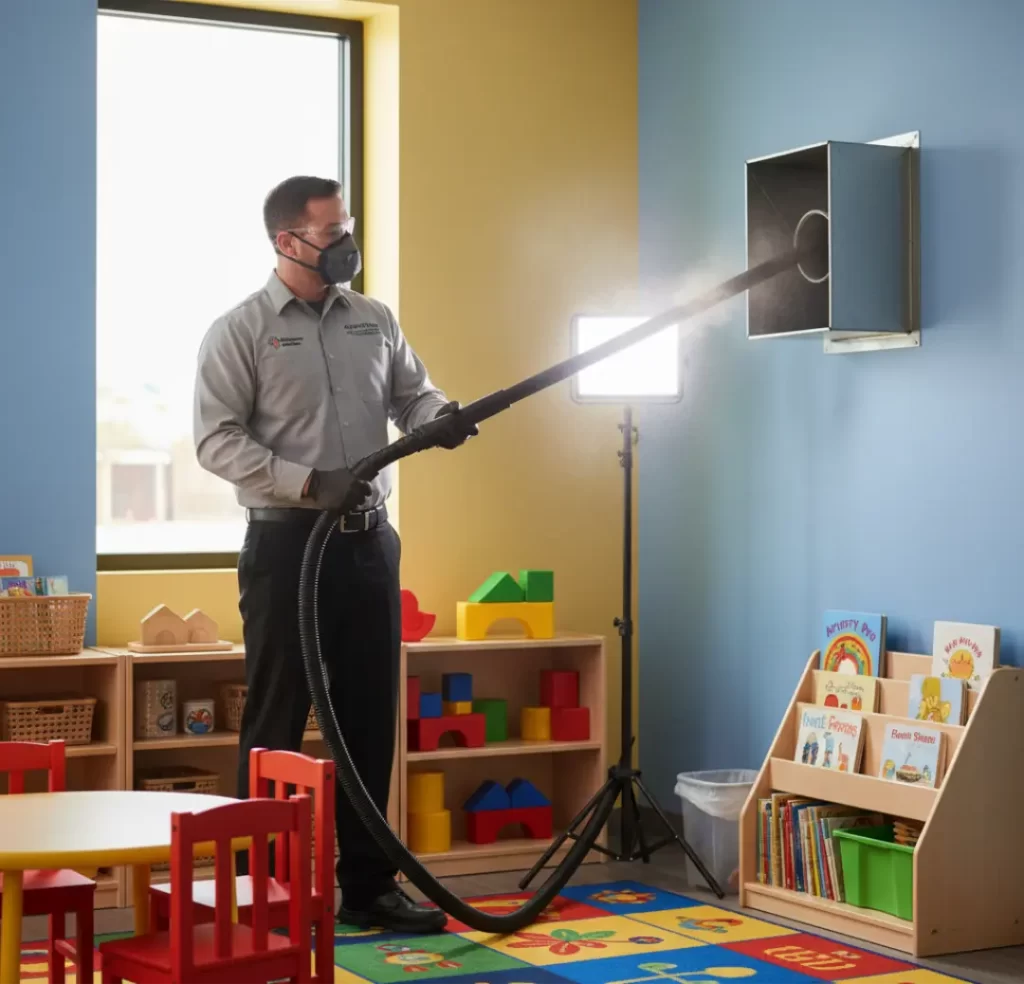
Standard janitorial staff are essential for surface cleaning, but they lack the specialized equipment required to reach the interior of a complex ventilation system. Professional duct cleaning involves more than just a vacuum; it requires a systematic approach:
- System Inspection: Technicians use remote cameras to identify blockages, mold growth, or structural damage.
- HEPA-Filtered Suction: High-power vacuum systems are connected to the main trunk lines to create negative pressure, ensuring that no dust escapes into the daycare rooms during the process.
- Mechanical Agitation: Specialized brushes and “air whips” dislodge stubborn debris from the walls of the ducts.
- Sanitization: If mold or bacteria are present, EPA-approved sanitizers can be applied to treat the surfaces and prevent future growth.
This deep-cleaning process ensures that the air provided to the classrooms is truly clean, rather than just filtered through a layer of old dust.
Ensuring a Healthy Future for Your Students
As a daycare provider, your commitment to the children in your care extends to every detail of their environment. By prioritizing the maintenance of your HVAC system, you are actively reducing the risk of illness, improving the comfort of your staff, and protecting your facility’s reputation. Clean air leads to better concentration, fewer sick days, and a safer space for early childhood development. Don’t let hidden pollutants compromise the high standards of your center.
At Space Air Duct Cleaning, we understand the unique safety requirements of childcare facilities and offer specialized, non-disruptive cleaning schedules to keep your center running smoothly. Contact us today to schedule a professional inspection and ensure that the children in your care are breathing the cleanest air possible.