If you find yourself sneezing the moment your air conditioner kicks on, even with every window shut, you are not imagining things. Between cedar fever in the dead of winter, oak and elm pollen in early spring, and ragweed picking up again every fall, North Texas puts allergy sufferers through a near year-round gauntlet. Most people assume the irritation is coming from outside, drifting in through a door left open too long or clinging to a jacket. Often, though, a good share of it is already living inside your home, recirculating through your own ductwork every time the system runs.
Since 1994, Space Air Duct Cleaning has helped homeowners across Dallas, Fort Worth, Plano, Arlington, Carrollton, Garland, Euless, Farmers Branch, and North Richland Hills breathe easier indoors. In this guide, you will learn how allergens actually get into your air ducts, whether cleaning them makes a real difference, and what else genuinely helps when allergy season hits North Texas hard.
How Allergens End Up Inside Your Ductwork
Your HVAC system pulls air through return vents, pushes it across the coil and blower, and sends it back out through your supply registers, often cycling the air in your home several times over the course of a single day. Every one of those passes is a chance for airborne particles to settle somewhere inside the ductwork itself rather than staying suspended in the air you breathe.
Outdoor Pollen, Dust & Pet Dander ──> Return Air Vent
▼
Ductwork & Air Handler
▼
Recirculated Into Your Living Space
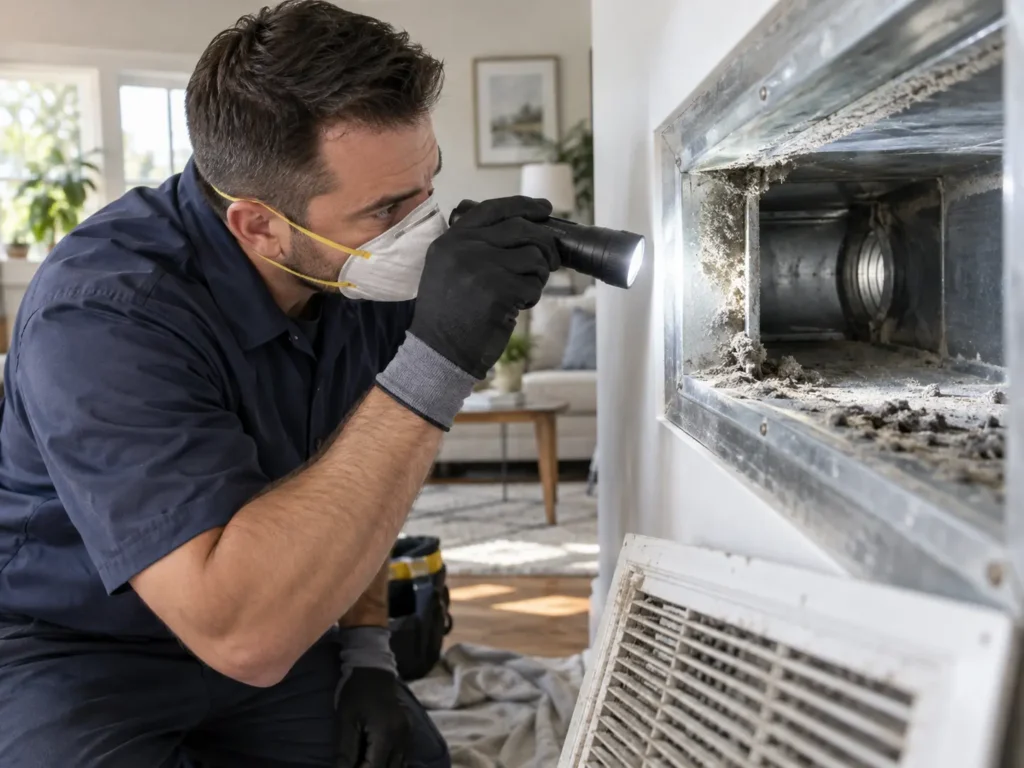
Pollen tracked in on clothes and shoes, pet dander shed onto floors and carried into vents, dust mite waste, and dry Texas dirt all get pulled into that cycle sooner or later. Once dust and organic debris build up along the interior walls of a duct, they do not just sit there quietly. Warm, humid air moving across them can encourage mold growth in shaded, damp sections, particularly near the coil and drip pan. Over months and years, your system is no longer just delivering cooled or heated air. It is delivering a little bit of everything that has settled inside those ducts, every single time the blower turns on.
What Duct Cleaning Can (and Cannot) Do for Allergies
It is worth being honest here rather than making big promises, because the science is more nuanced than a lot of marketing suggests. The Environmental Protection Agency has noted there is no large-scale, definitive study proving that duct cleaning prevents health problems in every home. That is a fair and accurate statement, and any company that guarantees allergy relief from a single cleaning is overselling what the research actually supports.
That said, plenty of allergy sufferers notice a real, tangible difference once heavy dust, pet dander, or mold buildup is professionally removed from a system that clearly needed it. The difference tends to show up most in homes where the ductwork had visible contamination to begin with, rather than in a system that was already reasonably clean. A household with multiple pets shedding constantly, a home that recently went through renovation or new construction nearby, or a family already dealing with asthma or chronic sinus symptoms is far more likely to notice improvement than a newer home with a single occupant and a well-maintained filter schedule. If none of that description fits your household and your ducts were cleaned within the past few years, allergy relief is more likely to come from filter changes and better source control at the vent level than from another full cleaning right away.
Other Ductwork Culprits Behind Your Allergy Symptoms
Duct cleaning is only part of the picture, and it is easy to overlook the smaller contributors that quietly make allergy symptoms worse indoors. Neglected air filters are one of the most common. A filter that has gone unchanged for months can no longer trap fine dust and pollen effectively, which means more of it bypasses the filter media entirely and ends up circulating right back into your living space. Leaky duct joints are another frequent offender, especially in homes where flexible ductwork runs through a hot, dusty attic. Gaps at the seams can pull in attic insulation fibres and loose dust, which then blow straight into bedrooms and living areas rather than staying contained within the system.
Humidity is a third factor that gets less attention than it deserves. Texas humidity combined with cold supply air moving through ductwork can create condensation, and that moisture gives mold a place to take hold, particularly around the evaporator coil and any low points in the duct run. If you notice a musty smell near a vent, especially right after the air conditioner starts a cycle, that is worth addressing directly through air duct sanitizing rather than ignoring it and hoping it resolves on its own.
The Role of Your HVAC Filter in Allergy Control
Your filter is doing more day-to-day work against allergens than most homeowners realize, and getting the right one matters almost as much as changing it on schedule. A higher MERV rating traps finer particles, including pollen and some pet dander, but a filter rated well beyond what your system was designed for can restrict airflow and strain the blower motor. The safest approach is to check your system’s manual or ask a technician what MERV range your equipment supports, then stay consistent with replacement every one to three months depending on pets, occupancy, and local pollen counts.
Simple Ways to Cut Down Allergens at Home
A few habits make a measurable difference without requiring constant effort. Staying consistent with filter changes, scheduling professional air duct cleaning every three to five years or sooner if pets and allergies apply to your household, and keeping indoor humidity in the 30 to 50 percent range all work together rather than in isolation.
- Change your air filter on the schedule your system supports, and lean toward the higher end of what it can handle for allergy season.
- Get your ducts professionally cleaned when there is visible dust, musty odor, or a household change like a new pet or recent renovation, rather than waiting on a strict calendar alone.
- Add duct sanitizing when odor or visible mold is present, since a standard cleaning alone will not fully resolve biological growth already established in the system.
- Consider a whole-home UV air purifier installed directly in the ductwork to help reduce airborne mold spores and bacteria as air continues to circulate.
Our air duct cleaning, air duct sanitizing, and UV air purifier services are each built around addressing a different piece of this problem, and a technician can help you figure out which combination actually matches what is happening in your home rather than guessing.
Breathe Easier in DFW with Space Air Duct Cleaning
Living with allergies in North Texas is hard enough without dirty ductwork working against you every time the system runs. Since 1994, Space Air Duct Cleaning has delivered trusted, transparent service throughout Dallas, Fort Worth, Carrollton, Farmers Branch, Euless, Garland, North Richland Hills, Plano, and Arlington. Our licensed, bonded, and insured, NADCA-certified technicians provide upfront pricing with no hidden fees, so you know exactly what you are getting before any work begins.
Ready for Cleaner, Allergy-Friendly Air?
Take advantage of our $99 general air duct cleaning special and give your allergy symptoms one less thing to fight this season.
Call Today: (469) 966-8858
Book Online: Free Quote / Schedule Now