Your home’s HVAC system is designed to be a silent provider of comfort, regulating temperature and filtering the air you breathe. However, beneath the surface of your vents, a hidden biological threat may be developing. Condensation inside air ducts is the primary catalyst for mold growth, a problem that compromises both the structural integrity of your HVAC system and the health of your family.
Understanding the relationship between moisture and microbial growth is the first step in maintaining a clean, efficient home environment. In this guide, we will explore why moisture forms in your ductwork, how it transforms into a mold colony, and the professional steps you can take to mitigate these risks.
The Science of Sweat: Why Do Air Ducts Get Wet?
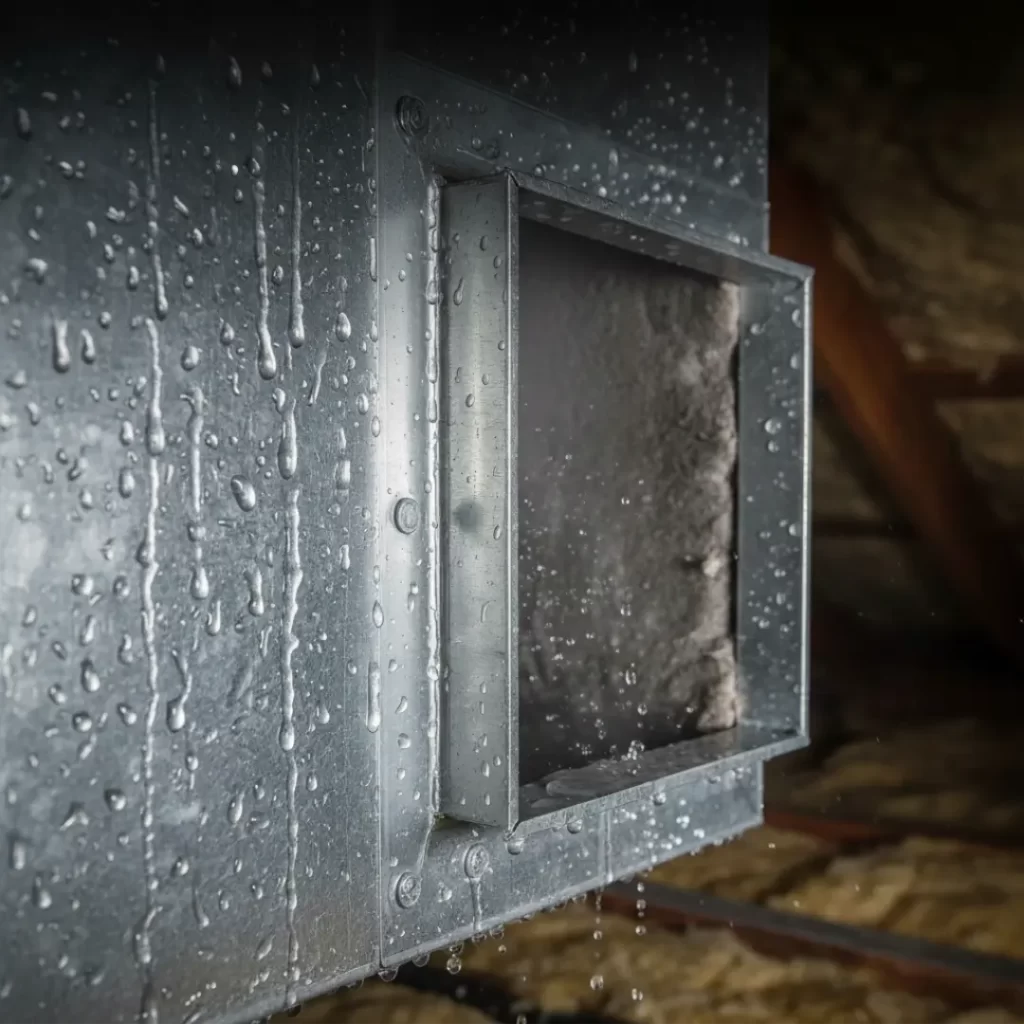
Condensation occurs due to a basic principle of thermodynamics: when warm, moisture-laden air comes into contact with a cold surface, the air loses its ability to hold water vapor. This vapor transforms into liquid droplets, often referred to as “duct sweating.”
In most households, this happens because of a significant temperature differential. If your attic or crawlspace is sweltering at 90°F and your air conditioner is pumping 55°F air through metal ducts, the exterior and interior of those ducts become breeding grounds for moisture. Without proper insulation or humidity control, these droplets accumulate and pool in the ridges of flexible ducting or the joints of metal pipes. According to the U.S. Department of Energy, uninsulated ducts in unconditioned spaces can lose significant energy while simultaneously creating moisture problems that lead to system degradation.
The Transition from Moisture to Mold
Mold spores are omnipresent; they exist in small quantities in almost every indoor and outdoor environment. To transition from a harmless spore to a growing colony, mold requires three specific ingredients: moisture, a food source, and a stable temperature.
- Moisture: Provided by the condensation mentioned above.
- Food Source: Dust, pollen, skin cells, and pet dander that inevitably settle inside your ductwork act as organic “food” for mold.
- Environment: The dark, stagnant interior of an HVAC system provides the perfect incubator for species like Aspergillus or Stachybotrys chartarum (black mold).
Once these elements align, mold can begin to colonize within 24 to 48 hours. As the HVAC system cycles on, it blows air over these colonies, potentially distributing microscopic spores throughout every room in your house. This turns your ventilation system into a delivery mechanism for allergens.
Identifying the Warning Signs of Duct Mold
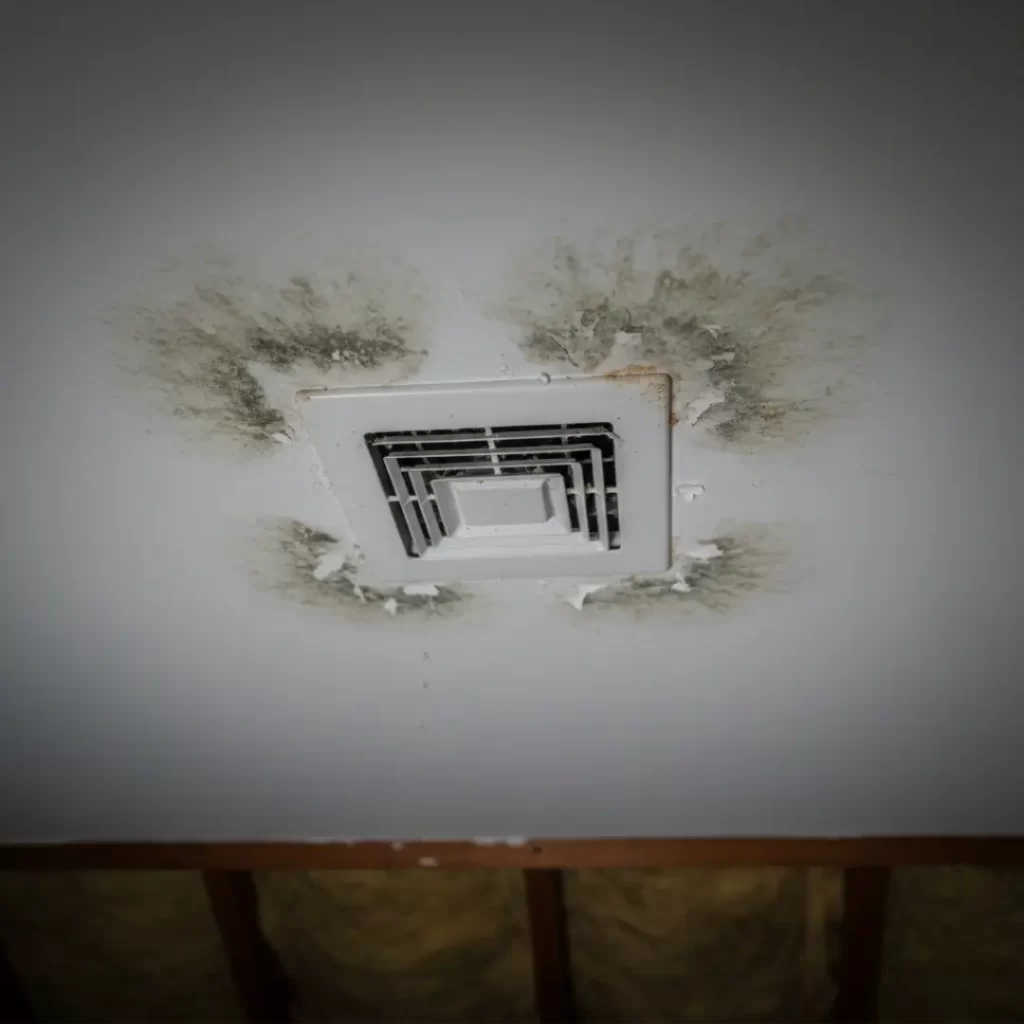
Detecting mold inside a hidden network of pipes can be challenging, but there are several “red flags” that homeowners should never ignore.
The Musty Odor Test The most common indicator of mold growth is a persistent, earthy, or “dirty sock” smell that intensifies when the AC or heat kicks on. If the smell is localized to one room, the issue may be in a specific branch of the ductwork. If it is widespread, the evaporator coil or the main plenum may be contaminated.
Visible Spotting on Vents Inspect your supply registers (the grates on your floors or ceilings). If you notice fuzzy black, green, or white spotting around the edges of the vent, it is a sign that spores are actively migrating from the ducts to your living space.
Unexplained Health Symptoms Consistent exposure to mold spores can lead to “Sick Building Syndrome.” If residents experience chronic headaches, sneezing, itchy eyes, or respiratory distress that disappears when they leave the house, the HVAC system is a likely culprit. The Environmental Protection Agency (EPA) warns that individuals with asthma or compromised immune systems are particularly at risk for severe reactions to indoor mold.
How to Prevent Condensation and Protect Your Air Quality
Prevention is significantly more cost-effective than remediation. To stop mold before it starts, you must address the root cause: moisture control.
First, ensure your home’s humidity levels stay between 30% and 50%. Using a dehumidifier in basements or crawlspaces can drastically reduce the “dew point” of the air surrounding your ducts. Additionally, ensure that your ducts are professionally sealed. Leaky ducts allow humid air to enter the system, where it rapidly cools and turns into liquid.
Second, prioritize high-quality filtration. By using filters with a higher MERV rating, you reduce the “food source” (dust and debris) that mold needs to grow. However, consult with an HVAC professional to ensure your system can handle the increased air resistance of thicker filters. For more information on indoor air standards, the American Lung Association provides extensive resources on maintaining healthy indoor environments.
The Role of Professional Air Duct Cleaning
While DIY maintenance like changing filters is essential, it cannot reach the deep recesses of your ventilation system where condensation pools. Professional intervention is required to safely remove existing mold and the debris that fuels it.
At Space Air Duct Cleaning, we utilize industrial-grade HEPA-filtered vacuums and specialized agitation tools to strip away years of accumulated dust and microbial growth. Cleaning your ducts doesn’t just improve air quality; it also improves the efficiency of your HVAC system. When ducts are clear and dry, your system doesn’t have to work as hard to push air, which can lead to lower monthly utility bills and a longer lifespan for your furnace and AC unit.
If you suspect your home is suffering from “sweating ducts,” it is imperative to act quickly. Ignoring the problem allows mold to take a deeper hold, eventually requiring expensive structural repairs or professional mold remediation for the entire property.
Take Control of Your Home’s Health Today
Don’t let hidden moisture compromise the air your family breathes every day; if you have noticed musty smells, visible spotting on your vents, or a sudden spike in your energy bills, it is time to give your HVAC system the professional attention it deserves. At Space Air Duct Cleaning, we specialize in identifying the root causes of duct condensation and providing thorough, high-efficiency cleaning services that restore your home to a safe, breathable sanctuary. Contact us today to schedule a comprehensive inspection and professional duct cleaning, and take the first step toward a mold-free, energy-efficient home.