
Laundry feels like the most routine chore in the house, right up until your dryer starts taking two or three cycles to get a single load dry. That extra run time is not just wasted energy and a longer folding session. It is often the first noticeable sign that lint has been building up somewhere inside your dryer vent, and in a hot Texas attic, that buildup is a more serious fire risk than most homeowners ever consider until something actually goes wrong.
Since 1994, Space Air Duct Cleaning has helped homeowners across Dallas, Fort Worth, Plano, Arlington, Carrollton, Garland, Euless, Farmers Branch, and North Richland Hills keep their laundry rooms safe and efficient. In this guide, you will learn how often Texas homes actually need dryer vent cleaning, the warning signs that mean you should not wait for the calendar, and why this small maintenance task matters more than most people think.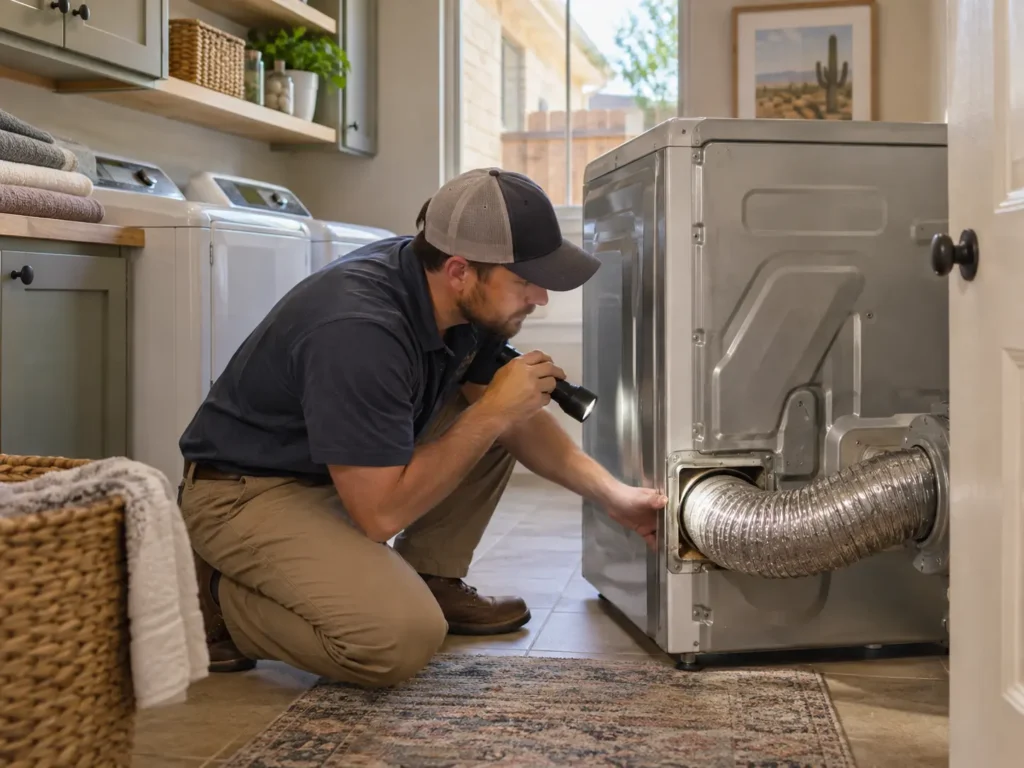
The General Rule vs. What Texas Homes Actually Need
Most manufacturers and fire safety organizations recommend cleaning your dryer vent at least once a year for an average household, and that baseline holds up reasonably well in many parts of the country. A few things about Texas homes push that interval shorter than the national average, though, and it is worth understanding why before you assume once a year is always enough.
Long, hot laundry seasons mean dryers run more often for more months out of the year, since heavy bedding and towels get washed year-round rather than seasonally. Vent runs that travel through blazing attic space add another variable, because heat inside the attic can bake lint into a denser, harder-to-dislodge layer along the interior of the duct. Larger households doing more frequent loads simply generate more lint overall, and every bend or turn in a vent run gives that lint more surfaces to catch on along the way to the exterior hood. A single-story home with a short, straight vent run behind the dryer is in a very different situation than a two-story home where the vent snakes through an attic before finally exiting the roofline.
The practical baseline for a typical Texas household works out to once a year, but homes with larger families, pets that shed heavily, or longer and more bent vent runs should plan on cleaning every six to nine months instead. If you are not sure which category your home falls into, a quick inspection from a technician can tell you definitively rather than leaving it to guesswork.
Household Factors That Shorten Your Cleaning Schedule
| Household Situation | Standard Schedule | Recommended Schedule |
|---|---|---|
| Family of 5+ doing daily laundry | Annually | Every 6-9 Months |
| Pets shedding hair and dander | Annually | Every 6-9 Months |
| Long or heavily bent vent run | Annually | Every 6-9 Months |
| Vent runs through the attic | Annually | Every 6-9 Months |
| Single occupant, short straight vent run | Annually | Annually |
Signs Your Dryer Vent Needs Attention Now
You do not always need to rely on a calendar reminder to know when it is time to service your dryer vent, because your appliance and your laundry routine will usually give you clues well before things become serious. The clearest and most common sign is clothes taking longer than a single cycle to dry, which almost always points to restricted airflow somewhere in the vent run rather than a problem with the dryer itself. Alongside that, pay attention to whether the outside of the dryer feels unusually warm to the touch during or after a cycle, since trapped heat has nowhere to go once airflow is blocked and it radiates back into the appliance housing instead of venting outside.
A burning smell during a cycle should never be brushed off as normal appliance odor. If you notice one, shut the dryer off immediately and have the vent inspected before running another load. Visible lint collecting around the dryer itself or around the exterior vent hood is another reliable indicator, since lint escaping through the seams of the appliance or hood usually means there is significantly more built up somewhere inside the run than what has managed to work its way out. Finally, take a look at the exterior vent flap the next time the dryer is running. A healthy, unobstructed vent pushes that flap open with a strong, steady stream of air, while a flap that barely moves is telling you the airflow behind it has already been substantially reduced.
Why a Clogged Dryer Vent Is More Than an Efficiency Problem
A slow-drying load is annoying, but the underlying fire risk is the real concern, and it is one that deserves more attention than it typically gets. Lint is highly combustible by nature, and national fire safety data has long linked clogged dryer vents to thousands of preventable home fires every year across the country. Combine that baseline risk with a Texas attic that already runs hot for the better part of the year, and a neglected vent stops being a minor inconvenience and becomes a genuine hazard sitting quietly behind your laundry room wall.
There is also a straightforward cost angle that is easy to overlook. A restricted vent forces your dryer’s heating element and motor to work harder and run longer to finish the same load it used to dry in a single cycle. That added strain shortens the appliance’s overall lifespan and adds a measurable, ongoing cost to your monthly energy bill, on top of whatever repair or replacement costs eventually follow from a motor or heating element that failed under sustained extra load.
What Professional Dryer Vent Cleaning Involves
A thorough dryer vent cleaning clears lint from the entire run, not just the short section you can reach by pulling the dryer away from the wall and vacuuming behind it. That includes the flexible transition hose, any wall or floor cavity the vent passes through, attic sections where applicable, and the exterior vent hood itself where lint tends to accumulate unnoticed. If the ductwork shows damage, crushed sections, or disconnected joints along the way, that is also the point where it makes more sense to look into dryer vent repair rather than cleaning around a structural problem that will simply refill with lint again within a few months.
Many DFW homeowners choose to bundle this service with a routine air duct cleaning visit, since a technician is already on-site and working through the home’s broader ventilation system. Handling both at once tends to be more efficient than scheduling two separate appointments months apart.
Keep Your Laundry Room Safe with Space Air Duct Cleaning
Dryer vent maintenance is easy to forget precisely because it is so routine, but the risks of letting it slide are real, especially given how much heat a Texas attic holds for most of the year. Since 1994, Space Air Duct Cleaning has delivered trusted, transparent service throughout Dallas, Fort Worth, Carrollton, Farmers Branch, Euless, Garland, North Richland Hills, Plano, and Arlington. Our licensed, bonded, and insured technicians provide upfront pricing with no hidden fees, so you always know what a job actually involves before we start.
Ready to Clear Out That Lint Buildup?
Take advantage of our $89 dryer vent cleaning special and keep your laundry room running safely and efficiently all year.
Call Today: (469) 966-8858
Book Online: Free Quote / Schedule Now