
Living in Texas means enjoying wide-open spaces and a beautiful climate, but for many, it also means navigating some of the most intense allergy seasons in the United States. While most people associate “allergy season” with being outdoors, the reality is that your home’s indoor air quality is inextricably linked to the botanical cycles happening outside. In Texas, the sheer volume and variety of pollen, from the notorious Mountain Cedar to widespread Ragweed, can easily infiltrate your living space, turning your HVAC system into a distribution network for allergens.
At Space Air Duct Cleaning, we understand that true relief from seasonal symptoms requires a deep look at what is happening inside your ventilation system. By understanding the Texas pollen calendar and how these microscopic particles behave once they enter your home, you can take proactive steps to protect your respiratory health and your property.
The Year-Round Texas Pollen Calendar
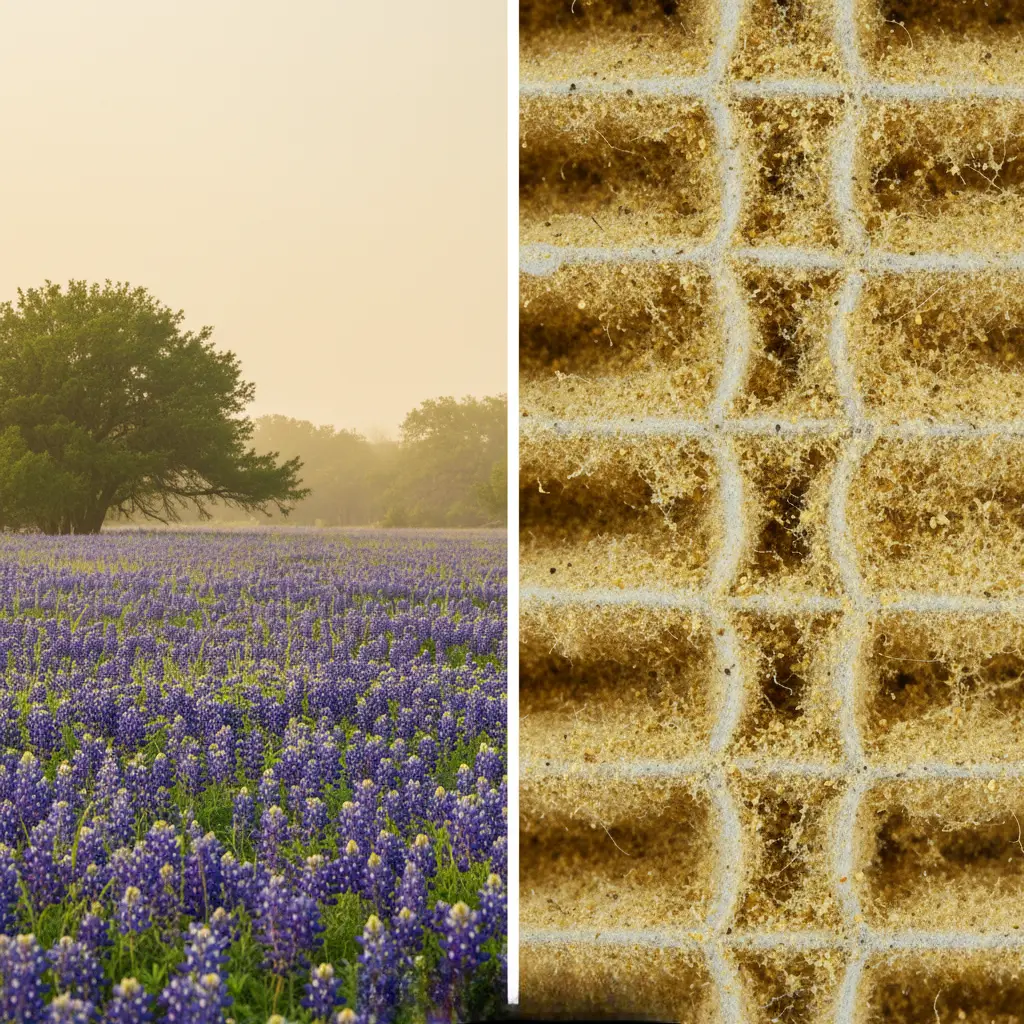
Unlike many northern states where winter provides a clean break from pollen, Texas features a nearly continuous cycle of pollination. This “triple threat” of trees, grasses, and weeds ensures that there is almost always an allergen in the air.
- Winter (December – February): This is the infamous “Cedar Fever” season. Mountain Cedar (Ashe Juniper) releases massive clouds of pollen that can travel hundreds of miles, often peaking during the coldest months when homeowners are most likely to have their heaters running and windows sealed.
- Spring (March – May): As the weather warms, Oak, Pecan, and Elm trees begin their cycle. Oak pollen is particularly heavy and sticky, often visible as a yellow film on cars and porches, and it is just as likely to stick to the interior of your air ducts.
- Summer (June – July): While tree pollen tapers off, various Grasses like Bermuda and Johnson grass take over. These particles are incredibly fine and easily bypassed by low-grade air filters.
- Fall (August – November): The year concludes with a massive spike in Ragweed. According to the Asthma and Allergy Foundation of America (AAFA), a single ragweed plant can produce up to one billion pollen grains in a single season.
How Outdoor Pollen Becomes an Indoor Problem
It is a common misconception that keeping windows and doors shut is enough to keep pollen out. Pollen enters the home through “stack effect” (air pressure differences), on the fur of pets, and even on your own clothing. Once inside, these particles don’t just disappear; they settle into carpets, upholstery, and most importantly, your HVAC return vents.
When pollen enters the return air ducts, it begins to accumulate on the walls of the ductwork and the evaporator coils. If the system is not professionally cleaned, every time the air conditioner or heater kicks on, it recirculates those trapped particles back into your bedrooms and living areas. This explains why many Texans suffer from “home-bound allergies,” where symptoms actually worsen after spending time indoors with the AC running.
The Impact on Your HVAC Efficiency and Health
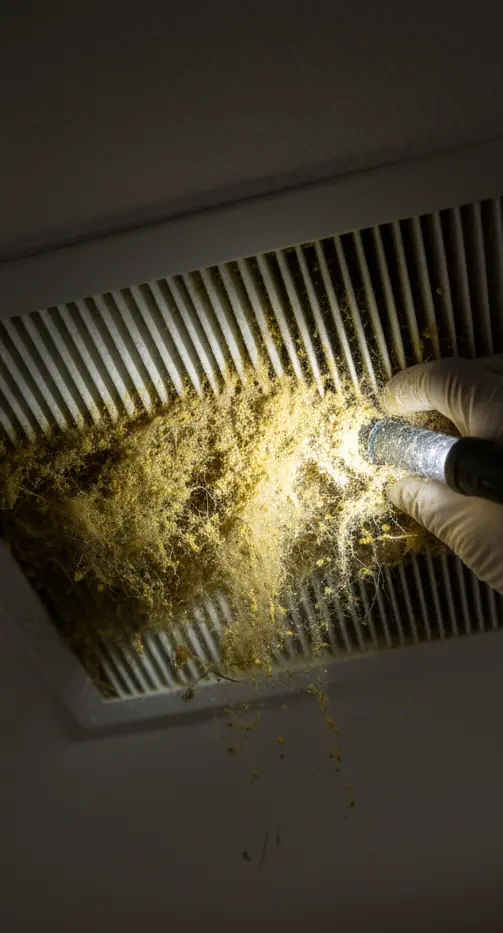
Beyond the physical discomfort of sneezing and itchy eyes, high pollen concentrations can physically degrade your HVAC system. Pollen is biological matter; when it combines with the moisture naturally found near your AC’s cooling coils, it can create a “sludge” that restricts airflow. This forces your blower motor to work harder, leading to higher energy bills and a shorter equipment lifespan.
The Environmental Protection Agency (EPA) notes that indoor air can be two to five times more polluted than outdoor air. In a high-pollen environment like North Texas, that concentration can spike even higher if the ductwork acts as a reservoir for allergens. Removing these “source contaminants” is the only way to ensure your air filtration system can actually do its job rather than constantly fighting a losing battle against recycled dust and pollen.
Professional Solutions for Seasonal Relief
Standard household vacuuming and air filter changes are important, but they only address the symptoms of poor air quality, not the source. To truly “pollen-proof” a Texas home, a professional source removal process is necessary. This involves using high-powered, truck-mounted vacuums and agitation tools to dislodge the sticky pollen and soot that has bonded to the interior of your air ducts.
At Space Air Duct Cleaning, we also recommend a specialized antimicrobial treatment following the physical cleaning. Because pollen is organic, it can serve as a food source for mold and bacteria if moisture is present. Sanitizing the ducts ensures that the environment is not only clean but also inhospitable to biological growth, providing a much longer window of relief for allergy sufferers.
Strategies for Maintaining Clean Air Between Cleanings
While a deep professional cleaning is the most effective reset for your home, maintaining that quality requires a multi-layered approach. We recommend the following steps for Texas homeowners:
- Upgrade Your Filtration: Use pleated filters with a MERV rating of 11 or higher during peak cedar or ragweed seasons to capture smaller particles.
- Monitor Local Counts: Follow data from the National Allergy Bureau to know when to keep doors closed and when to schedule your seasonal maintenance.
- Groom Pets Frequently: Since pets are “pollen magnets,” bathing them or wiping their fur after outdoor walks can prevent them from bringing allergens directly into your carpet and vents.
Reclaim Your Home from Texas Allergens
You shouldn’t have to suffer from “Cedar Fever” or ragweed allergies inside your own house. If you notice a spike in respiratory issues when your HVAC system turns on, or if you see a constant layer of fine dust on your furniture, your air ducts are likely saturated with seasonal pollen. The team at Space Air Duct Cleaning is dedicated to providing Dallas-Fort Worth residents with the highest level of technical expertise and specialized equipment to remove these irritants for good. We follow rigorous industry standards to ensure every inch of your ventilation system is decontaminated, allowing you to breathe easy regardless of the season outside. Contact us today or call at 469-694-3943 to schedule a professional air quality inspection and take control of your indoor environment.