When most homeowners think about dryer vent safety, their minds immediately jump to fire hazards caused by lint buildup. While fire prevention is a vital concern, there is another silent threat that often stems from the very same source: excessive moisture infiltration. A dryer’s primary job is to remove water from your clothes by turning it into vapor and exhausting it out of the home. However, when a vent is installed improperly, whether due to poor routing, incorrect materials, or inadequate sealing, that moisture has nowhere to go but into your walls, crawl spaces, and attic.
At Space Air Duct Cleaning, we have seen firsthand how a seemingly minor installation error can lead to thousands of dollars in structural damage. Understanding the mechanics of moisture transport within your ventilation system is the first step in protecting your home from the rot and biological growth that follow poor installation practices.
The Science of Dryer Exhaust and Condensation
Every load of laundry contains a significant amount of water. As the dryer heats up, this water evaporates into warm, moist air. For the system to function correctly, this air must be moved quickly and efficiently to the exterior of the structure. If the exhaust path is too long or contains too many sharp turns, the air slows down and cools before it can exit.
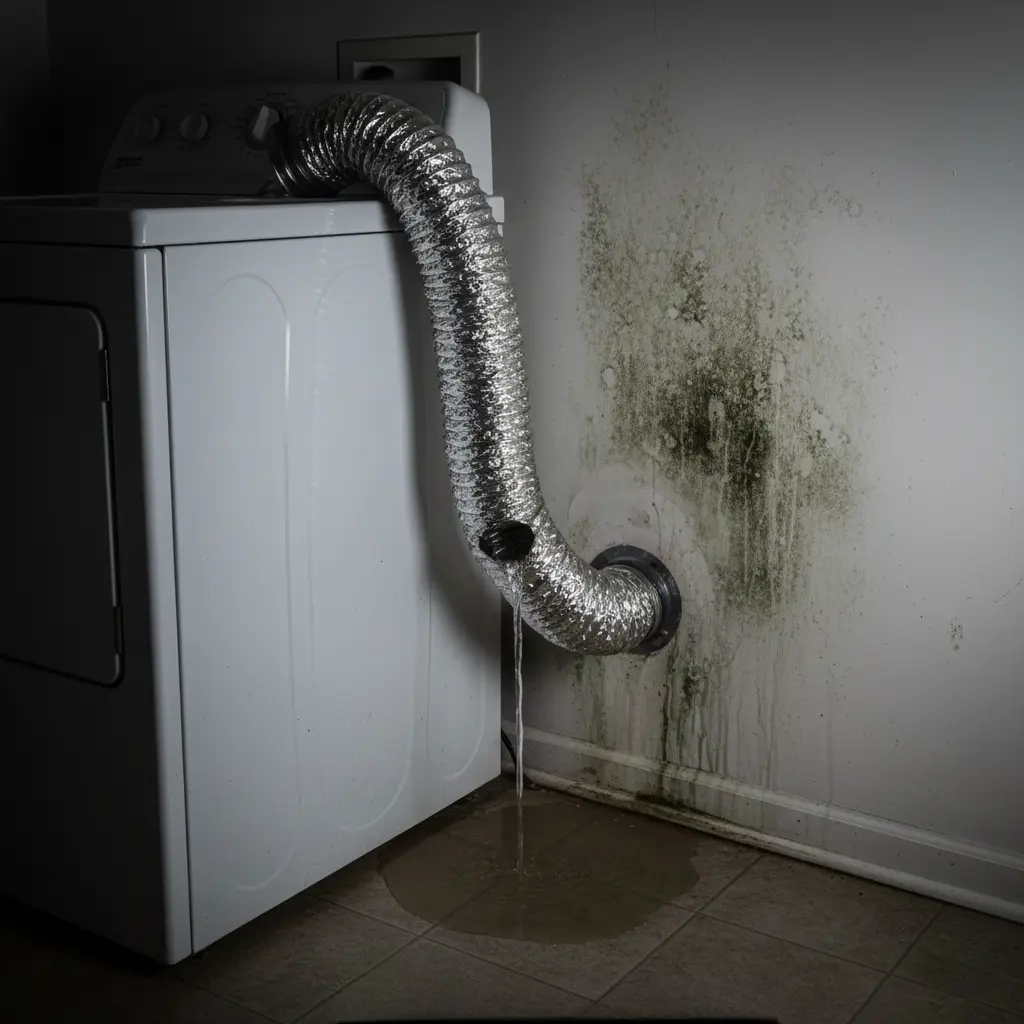
When warm, humid air cools within the vent, it undergoes condensation, turning back into liquid water. This liquid then pools in low spots of the ductwork or seeps through the joints of the venting material. According to the Department of Energy, proper venting is essential not just for energy efficiency but for maintaining the integrity of the building envelope. Without a clear, direct path to the outside, your dryer essentially acts as a high-powered humidifier, pumping gallons of water into the hidden cavities of your home.
Common Installation Errors That Trap Moisture
One of the most frequent mistakes in residential construction or DIY repairs is the use of flexible foil or plastic “accordion” piping. While these materials are inexpensive and easy to maneuver, they are highly detrimental to airflow. The internal ridges create turbulence and catch lint, which quickly creates a damp, soggy mass that blocks exhaust. Furthermore, these materials are easily crushed or kinked behind the dryer, creating immediate back-pressure.
Another critical error is venting into an attic or crawl space rather than all the way to the exterior. This is a direct violation of most local building codes and a recipe for disaster. When moist air is dumped into an attic, it hits the cold underside of the roof deck, leading to wood rot and destroying the R-value of your insulation. Professional installation requires rigid metal ducting with taped joints to ensure that 100% of the vapor reaches the outdoors.
The Link Between Moisture and Mold Growth
Moisture is the primary catalyst for mold and mildew. When a dryer vent leaks inside a wall or ceiling, it creates a dark, warm, and damp environment, the perfect “triple threat” for fungal colonization. Often, homeowners do not realize there is a problem until they see peeling paint, water stains on the ceiling, or a persistent musty odor in the laundry room.
The Centers for Disease Control and Prevention (CDC) emphasizes that controlling moisture is the most effective way to prevent mold growth in the home. An improperly installed dryer vent bypasses your home’s natural defenses, injecting moisture into areas that are not designed to handle it. Over time, this can compromise the structural studs of your home and lead to significant indoor air quality issues that affect the health of every occupant.
Mechanical Strain and Dryer Longevity
When a vent is improperly installed, the moisture does not just damage your home; it damages the appliance itself. A dryer that cannot exhaust properly will experience back-drafting. This means the moist air stays inside the drum, significantly increasing drying times. Homeowners often find themselves running the same load two or three times to get clothes dry.
This extended run time causes the heating element to stay active far longer than intended, leading to premature burnout. Additionally, the high humidity inside the dryer cabinet can cause internal sensors and electrical components to corrode. By ensuring a professional, code-compliant installation, you are not only protecting your walls from moisture but also extending the life of your expensive laundry equipment and lowering your monthly utility costs.
Technical Standards for a High-Performance Vent System
A high-quality dryer vent installation should prioritize the path of least resistance. At Space Air Duct Cleaning, we advocate for the use of smooth-walled rigid metal ducting. Unlike flexible transition hoses, rigid metal reduces friction and prevents lint from snagging, which in turn prevents the moisture traps that lead to condensation.
Furthermore, the exterior vent hood must be checked for proper operation. If the flapper is weighed down by lint or stuck closed due to poor installation, the moist air will be forced back into the house. We also ensure that the vent path is as short as possible, avoiding vertical rises where gravity might cause condensed water to run back down into the dryer’s sensitive motor assembly. Following these technical benchmarks ensures a dry, safe, and efficient laundry environment.
Ensure Your Home is Protected with Professional Installation
Don’t let a poorly routed vent turn your laundry room into a breeding ground for moisture-related problems. At Space Air Duct Cleaning, we bring years of field-tested experience and technical precision to every dryer vent project in the Dallas-Fort Worth area. We don’t just clear out lint; we evaluate the entire geometry of your ventilation system to ensure it meets modern safety and efficiency standards. Whether you are dealing with a new installation or suspect your current vent is leaking moisture into your home, our team is ready to provide a permanent, professional solution. Contact us today or call at 469-694-3943 to schedule an inspection and ensure your home stays dry, safe, and efficient.