If you live in Texas, you are likely familiar with a frustrating routine: you spend your Saturday morning dusting the living room, wiping down ceiling fans, and polishing surfaces, only to find a fresh layer of gray film covering everything by Tuesday. It isn’t a reflection of your cleaning skills, and you aren’t imagining things. Texas homes genuinely accumulate dust at a faster rate than homes in many other parts of the country.
At Space Air Duct Cleaning, we have seen the insides of thousands of ventilation systems across the state. We know that the battle against dust in Texas is unique. It is a perfect storm of geography, climate patterns, rapid urbanization, and heavy reliance on air conditioning. Understanding why this happens is the first step toward reclaiming your home from the constant grit.
The Geography of Grit: Soil and Wind Patterns
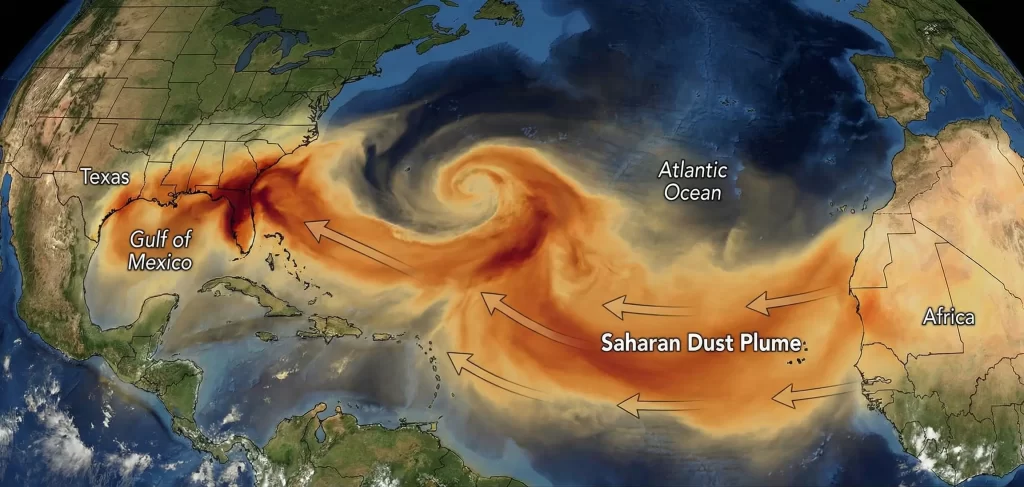
The primary culprit is the land itself. Texas sits at a unique geographical crossroads that makes it particularly susceptible to airborne particulate matter. Unlike the Pacific Northwest, which has constant moisture to weigh down soil, or the Northeast, which has dense ground cover, much of Texas features dry, loose topsoil.
In West Texas and the Panhandle, the landscape is dominated by arid plains. When strong wind currents sweep across these regions, they pick up fine particles of clay, sand, and silt. These particles are light enough to remain airborne for hundreds of miles, carried by the prevailing winds directly into the populous regions of Dallas-Fort Worth, Austin, and Houston. Even if you don’t live near a farm or a desert, the wind is constantly delivering microscopic soil deposits to your doorstep.
Furthermore, Texas frequently experiences periods of drought. When the ground dries out, the soil loses its cohesion. This allows even minor breezes to kick up significant amounts of dust. According to the Texas Commission on Environmental Quality (TCEQ), particulate matter pollution can spike significantly during these dry spells, infiltrating homes through even the smallest cracks in windows and doors.
The HVAC Factor: The Price of Year-Round Comfort
In many northern states, homeowners might open their windows for months at a time, relying on fresh breezes to cool their homes. In Texas, that is rarely an option. Our intense heat and high humidity mean that Texas homes rely on forced-air HVAC systems nearly year-round.
Your air conditioner is the lungs of your home, but in Texas, those lungs are working overtime. Because the system is running almost constantly to combat the 100-degree heat, it is constantly cycling air. Every time the fan kicks on, it pulls air, and dust, into the return vents.
The Recirculation Cycle
The problem arises when the dust isn’t captured effectively. As the system runs, it pulls in dust from the floor, pet dander, and fibers from carpets. If the air ducts are already dirty, the system simply picks up that settled debris and blows it back out into the living space. In a state with less AC usage, dust has time to settle and stay put. In Texas, your HVAC system is constantly churning it back into the air you breathe.
Cedar Fever and The Pollen heavy-hitters
It isn’t just dirt; it’s nature. Texas is home to some of the most aggressive pollen producers in the country. Central Texas, in particular, is famous for “Cedar Fever.” During the winter months, when most of the country is covered in snow and pollen is non-existent, Texas Mountain Cedars release massive clouds of pollen that look like smoke.
This pollen is heavy, sticky, and pervasive. It coats cars in a yellow-green film and inevitably tracks into your house on shoes, clothes, and pets. Once inside, this biological dust dries out and crumbles, adding to the particulate load in your air. Because this happens in winter (when you might run the heater) and spring (oak pollen season), there is virtually no “off-season” for airborne allergens in Texas.
You can track local allergen levels through resources like the American Academy of Allergy, Asthma & Immunology (AAAAI), which frequently highlights Texas cities as hotspots for pollen-heavy air.
The Boom of Construction and Urban Sprawl
Texas is one of the fastest-growing states in the nation. Whether you are in a suburb of Houston or a developing neighborhood in San Antonio, chances are there is a construction site nearby. The Texas economic boom comes with a dusty price tag.
Construction sites are massive generators of fugitive dust. Excavation, concrete pouring, and drywall sanding release tons of particulate matter into the local atmosphere. This “construction dust” is different from regular soil; it often contains silica and cement particles that are finer and more abrasive. If you live within a few miles of a new development or highway expansion, your HVAC system is constantly fighting against this industrial-grade dust.
Structural Shift: The Leaky Home Syndrome
Another uniquely Texan issue is our foundation volatility. Many Texas homes are built on expansive clay soils that swell when wet and shrink when dry. This constant movement causes foundations to shift slightly over time.
While a minor shift might not threaten the structural integrity of the house, it often creates small gaps around window frames, door jambs, and attic eaves. These “leaks” destroy the airtight seal of your home. During a windy Texas day, the negative pressure created by your running air conditioner sucks outside air (and dust) through these tiny gaps. You are essentially vacuuming the outdoors into your living room.
Why Standard Cleaning isn’t Enough
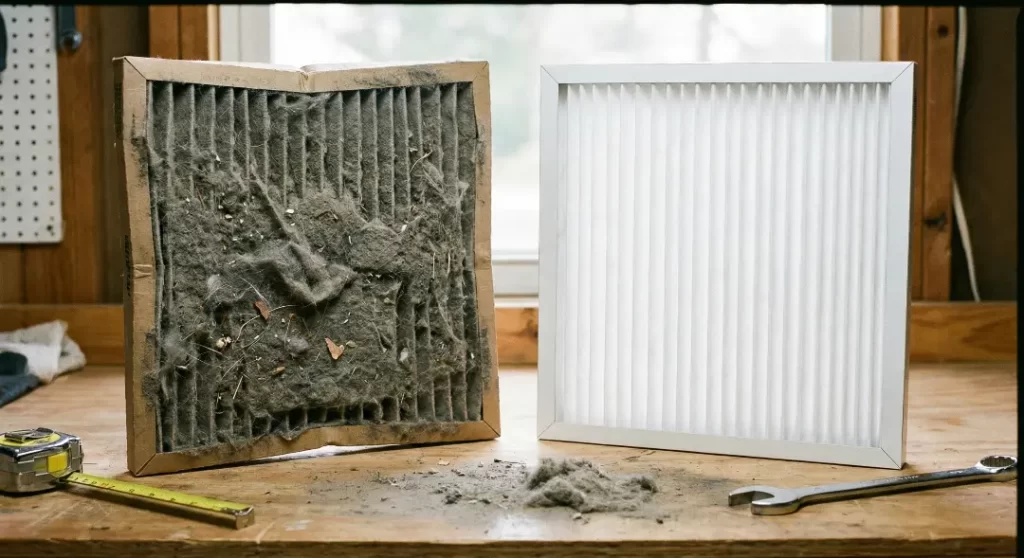
Most homeowners assume that changing the air filter is enough to stop the dust. While a high-quality filter is essential, it cannot catch everything. Over years of Texas living, fine dust bypasses the filter and settles inside the ductwork itself.
Once this happens, your ductwork becomes a reservoir for dust. No matter how much you vacuum the rugs or wipe the counters, the source of the problem remains hidden in the ceiling. Every time the AC turns on, a small amount of that stored dust breaks loose and settles on your furniture. This is why professional air duct cleaning is not a luxury in Texas, it is a maintenance necessity.
How to Win the War on Dust
While you cannot change the Texas climate or stop the wind from blowing, you can fortify your home against the invasion.
- Upgrade Your Filtration: Switch to a filter with a higher MERV rating (Minimum Efficiency Reporting Value) that is capable of trapping smaller particles. However, consult with an HVAC pro first, as a filter that is too dense can strain your system.
- Seal the Envelope: Inspect your windows and doors for drafts. A simple application of caulk or new weatherstripping can significantly reduce dust infiltration.
- Groom Pets Regularly: Texas heat means pets shed more often. Brushing them outside keeps that dander out of your intake vents.
- Schedule Professional Duct Cleaning: This is the “reset button.” By physically removing the years of accumulated soil, pollen, and construction debris from your ventilation system, you stop the cycle of recirculation.
Stop cleaning the same dust over and over again. If you are ready to breathe easier and spend less time dusting, it is time to address the root of the problem. At Space Air Duct Cleaning, we use industrial-grade equipment to thoroughly sanitize your HVAC system, removing the Texas grit that has taken over your home. Contact us today to schedule your comprehensive air duct inspection and cleaning, let’s make your home feel fresh again.